Located next to the Little Jimmy statue, Varner House is named for Bernice Reaney Varner, a woman leader whose impressive contributions to this institution’s success deserve greater recognition. This unusual building opened in 1929 as a practice house, a kind of laboratory where women majoring in Home Economics could apply their lessons. Varner was head of the Home Economics department in the 1940s and 1950s. Previously, she served as the first Dean of Women, a groundbreaking administrative position that evolved into today’s division of Student Affairs. Respected by colleagues and beloved by students, she repeatedly challenged society’s rigid gender conventions in her professional work and in her private life as a divorcee who openly lived with another woman for decades. Like Yuri Nemoto and Walker Lee, Varner has a surprising story that improves our understanding of this institution’s history and culture.
Bernice Varner first set foot on the Quad in fall 1923, just as the renamed State Teacher’s College at Harrisonburg (or HTC) received permission to award its first bachelor’s degree in education. By all accounts vivacious, intelligent, and perceptive, she was 34 years old, stylish and auburn-haired, the kind of woman who stood out in a crowd. President Duke hired her as inaugural Dean of Women to manage the surge of young women enrolling after WWI and the 19th Amendment. Unheard of today, her job title was once common. Every campus with a female population—including coed colleges–had a designated administrator whose job it was to monitor women students’ adjustment to campus life, academic performance, and social deportment. In the 1920s, these positions and their professional responsibilities were still new and unstandardized, so Varner had great latitude to define not only her own duties but those of the deans who followed her.
Varner was well prepared for her new role. She had recently received a masters degree from George Peabody College in Nashville, Tennessee, her home town. Previously, like many ambitious Southern women, she went north for her education—a BS degree at Illinois Wesleyan followed by graduate courses at the Illinois State Normal, Johns Hopkins, and at Columbia Teacher’s College in New York, the nation’s most reputable institution for future college educators. Varner had also served as head of the Home Economic department at the New Jersey State Normal in Trenton, so she had administrative experience as well as years of teaching.1
She was recently married, too. Her husband, Wallace Brown Varner, hailed from Bridgewater, Virginia, so the local connection probably explains why they left New Jersey. He had an AB from Bridgewater College and a master’s in divinity from Vanderbilt, where he was teaching when they met. They were an older couple at a time when the average age at marriage was about 25. Significantly, their July 1922 wedding notice in a Nashville newspaper acknowledged the bride’s faculty position and added that “her publications had received much favorable comment.” The author, likely Bernice herself, clearly wanted friends and family to know that the new Mrs. Varner intended to keep working. It was her career, in fact, that brought them to Harrisonburg.
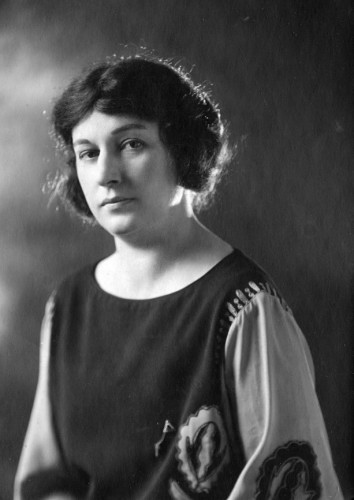
Today, we would call Bernice the breadwinner and Wallace a ‘trailing spouse,’ an unconventional arrangement of gender roles even now. They settled into a house on South Main Street, just a quick walk from the Quad. Yearbooks indicate that Wallace joined the HTC faculty and taught courses in ‘biblical literature’. Bernice, by contrast, did not teach much, if at all. As Dean of Women, her days were full of meetings, presentations, and administrative paperwork in her office in the brand new Alumnae Hall. (She had the first office on the left, first floor.) Records indicate she managed several staff, including Mrs. Sarah Milnes, assistant dean of women and director of dormitories. Managing all student affairs, she was a member of President Duke’s executive council, serving alongside Dr. Walter Gifford, Dean of the College, Dr. James Johnston, secretary of the faculty, and five others.2 She was a busy woman who undoubtedly hired domestic help to run her own household. And she had high standards. She hosted intimate, work-related events like teas in her private residence as well as formal affairs for hundreds of people on campus. Breeze articles indicate that Wallace typically accompanied her to public events, and we can imagine the talk they generated, the striking, redheaded dean and her escort.
Several stories from the 1920s reveal how she challenged gender restrictions of the day. The first says, “When [Bernice Varner] became dean, the administration and faculty were valiantly trying to hold the line against bobbed hair.” Student teachers, the majority of HTC students, were prohibited from cutting their hair until Bernice came back from a conference one summer wearing the new style. A bob is basically a short, chin length cut—easy to care for, quick to dry, and individualizable with bangs, tapered layers, sleek finger waves or bouncing curls, the style signaled women’s growing freedom and came to define 1920s fashion. In the early years of the decade, however, many Americans rejected the bob, deeming its wearers ‘fast’ and ‘mannish.’ Reading between the lines, we can see that Duke tried to uphold traditional norms of Southern womanhood, which viewed long hair carefully pinned up after puberty as a sign of respectable femininity and controlled sexuality. Yearbooks from the early 1920s show changing attitudes, for they document how women faculty, staff, and students began rearranging their long hair low around the neck and chin in a visual approximation of the new style. Bernice herself wore the transitional style until summer 1926, when she cut her auburn locks. The news made the Virginia Teacher: “Mrs. Sarah Milnes acted as Dean of Women [during summer session]. Mrs. Varner paid the school a visit and started an exclamatory riot with her recently bobbed hair.” Duke then “gave up the fight,” indicating Bernice leveraged her role as Dean to affirm that short hair was acceptable. A coda to the story notes that so many young women followed Bernice’s example that hair overflowed the trash cans in the dorms.3
The second story is similar. Apparently, Duke prohibited HTC students from flying in airplanes, too. Flight was very risky in those days, and many people considered it especially dangerous and improper for women. Research shows that a new airfield was operating near Waynesboro, just south of Harrisonburg, by 1928. Civilian pilots flying surplus WWI biplanes were going from town to town, barnstorming and giving rides to locals for money. One day, Duke was out golfing near campus when a biplane flew down and buzzed him—he looked up and was astonished to see that Bernice Varner was the passenger behind the pilot! How he recognized her is unexplained—perhaps her red hair was visible or perhaps the pilot circled low. Regardless, the story says she denied a young woman permission to fly, upholding the school rule, but when she saw how disappointed the young man was, she went up with him, instead. As in the bobbed hair story, she did not agree that flight was unfeminine and proved the point by doing it herself.4
These collective memories, shared orally by alumnae and then recorded in Dingledine’s 1958 history of Madison College, tell us how Bernice viewed her role and how students and administrators viewed her. We see a confident person who very publicly broke several rules she found unreasonable. A 1927 Breeze article explains that the Dean of Women had to enforce communal standards of feminine decorum on and off campus. She presided over grace before meals, for example, hosted the aforementioned teas and receptions, directed the YWCA, and oversaw the many parietal rules that governed both student behavior and bodies (these included the granting of class privileges like unchaperoned dating as well as the prohibiting of short haircuts). Other duties involved orienting all new students when they arrived at the start of each quarter, providing individual counseling to troubled students, and approving or declining requests to leave campus for personal or family matters. Bernice also managed disciplinary proceedings and enforced punishments when infractions occurred.5 A professional woman in her late 30s, she constantly had to weigh the expectations of approximately 400 young women aged 18-21 against those of the college’s leaders, namely Duke and several powerful senior faculty in their 60s, especially Dr. John Wayland and Elizabeth Cleveland, who Dingledine says “were valiantly trying to hold the line” against the forces of modernization. Bernice had to walk a gender tightrope to succeed at work, one many professional women still walk today. Raymond Dingledine, Jr., who knew Bernice Varner personally, captured for posterity her independence and assertiveness, traits coded masculine, while highlighting her overtly feminine appearance and demeanor: “Poised and vivacious, Mrs. Varner combined ability and activeness. Favoring green and brown clothes to set off her auburn hair, she set a good example of good taste in dress for the girls.” Fortunately, she had a strong ally in President Duke, who favored expanding educational programs and opportunities for women.
The Roaring ’20s context matters: contemporary Americans think of Model-Ts, talking pictures, and jazz clubs, but this decade brought Prohibition, severe immigration restrictions, eugenics, and a revived Klan, among other regressive movements intended to check social advances. Gender roles were especially contested in this period. The young women of HTC were not ‘flappers.’ Yet, as I often remind people, they were all unconventional in pursuing a degree in the first place. Some of them did get into scrapes, make mischief, and break the school rules, just as college students do now. Quite a few were ‘boy crazy,’ as yearbooks and alumnae scrapbooks attest. Dating conventions loosened dramatically in the automobile age, and Dean Varner spent many hours policing students’ interactions with young men. To prevent sexual activity, both voluntary and involuntary, riding unchaperoned in cars with a man was strictly prohibited unless one was a senior in good standing and the man had parental approval. All young women, however, regardless of class rank, had to come to Alumnae Hall to sign out and sign back in under Bernice’s watchful eye, even to walk into Harrisonburg. Indeed, I suspect that Bernice, as the first Dean of Women, is the one who formalized the infamous sign-out system, which lasted until 1970. While known for “a forceful interest in maintaining standards,” that 1927 Breeze article indicates she was well liked by the students. Bernice told the student reporter she understood that her title “can frighten new girls,” so she strove always to be “approachable.” A 1929 article confirms that she succeeded: it lauded her as “Our College Mother” and, tellingly, listed her first among the school’s administrative leadership, before “Our College President,” Dr. Duke.6
Despite these indications that she was doing her job well, Bernice mysteriously disappeared from HTC for several years. She left in spring 1930 and returned in fall 1934. My sleuthing reveals she and Wallace Varner separated about 1929, when records show him running a business in nearby Staunton. In 1935 he remarried, indicating a divorce during her absence from HTC. The reason for the dissolution is unknown. Regardless, Duke likely required her to resign as a consequence. Although divorce was becoming more common in the 1920s, it was far from respectable, and I suspect the unconventional Bernice went too far. Consider that Home Economics professor Pearl Moody, who divorced her husband before coming to Harrisonburg, represented herself as a ‘widow’ in census records, indicating she hid her true marital status to work at HTC. Bernice could not have hidden her divorce, however; Wallace’s sudden absence was noteworthy. She went home to Tennessee, where sources place her first in Nashville, then at Middle Tennessee State College, where she was head of the Home Economics Department in 1933. But then she inexplicably returned to HTC as a regular faculty member.7
Still a source of public interest, Bernice consented to another interview in the Breeze in October 1934. Stories about her swirled among the students, her fellow faculty, staff, and neighbors. Did she hear whispers, feel stares? The reporter pointedly asked what Bernice thought about the changes implemented by Mrs. Annie Bailey Cook, the new Dean of Women, who later accounts portray as more aloof and more rigid. Bernice’s reply showed remarkable pluck and diplomacy; she took pride that the programs and policies she initiated were still going strong. “Many of the things I started as dean of women are still in evidence, with many improvements, which makes me happy,” she said. Her duties in this period revolved around teaching classes in nutrition, cookery, and industrial management, but she lived in a dormitory, where she served as the official housemother. That assignment meant additional income and responsibility and further underscores the administration’s continued trust in her personal judgment and professional expertise.8
That trust is noteworthy because Bernice lived with another woman, Mary Waples, from about 1947 until her death. They resided at 30 Maplehurst Avenue, a two-story, brick Colonial house that Bernice purchased soon after she became head of the Home Economics department in 1940. She presided over a rigorous, consequential academic program, one that launched many Madison alumnae into careers in dietetics, healthcare, government extension offices, social services, industry, and hotel-restaurant management. When the census taker knocked at their door in 1950, he listed Bernice Varner first as “head of household” and labeled Waples her “partner,” not lodger or roomer, words that routinely appear on other pages for other Harrisonburg residents.9 According to historian Dan Bouk, US census officials adopted partner in 1940 to define the unconventional relationships they increasingly encountered among cohabitating people.10 Bernice Varner was the person who opened the door and answered the enumerator’s many questions: name, age, level of education, occupation, salary, property status, place of birth, length of residence, and more. Enumerators recorded answers for each resident, as well as each resident’s relationship to the household head. We can infer from the enumerator’s word choice that Bernice described her and Mary Waples’s relationship as more than landlord-tenant. And other sources confirm that she and Waples were a longtime, committed couple, one recognized as such by their community.
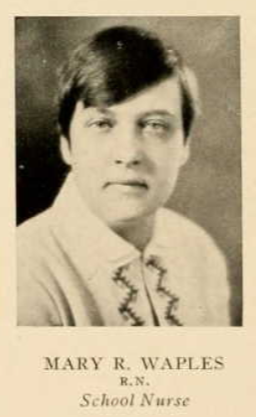
Who was Mary Waples? A native of Richmond, she was the school nurse and head of the infirmary at HTC when Bernice Varner arrived as Dean of Women in 1924. Waples also taught nursing classes in the Home Economics program, and the two women worked closely together, given their positions on campus. They were also of the same generation (Waples was born in 1896) and shared a common culture as Southern white women who became professionals. Waples resigned her position at Madison College in 1944, however, to join the Red Cross as a field representative. This role required her to travel around western and central Virginia teaching first aid and nursing classes. Sharing a residence with a friend and colleague would have been economical and practical. Yet, the daily ‘Women’s Page’ of the local newspaper suggests they did almost everything together–attended church, went to campus events, participated in service organizations, and entertained. A December 1956 item, for example, notes that Bernice hosted the Pi Chapter of Delta Kappa Gamma meeting at their shared house, where Mary Waples helped serve the “delightful Christmas refreshments.”11
Couples like Varner and Waples were not wholly unusual, especially at a women’s college. In the 1880s, the term ‘Boston marriages’ emerged to describe the phenomenon of two women, usually college-educated and professionally employed, who lived together independently, that is, without a man’s financial support. As the word ‘marriage’ indicates, such women were understood to be in long-term, committed, and by all accounts loving unions. Famous couples like Lorena Hickok and Eleanor Roosevelt or Jane Addams and Mary Rozet Smith were ‘out’ to their closest circles, though the true nature of their relationships were not and are still not widely known to the general American population. But modern scholars of LGBTQ history caution against assuming there was always a sexual component to these unions, although that was common. Using contemporary language that these women would not have known to describe their experiences and identities is also inappropriate. Co-habitating women pairs often described themselves as friends or companions, terms that affirm emotional attachment even as they obscure. Maintaining privacy was especially important as the pathologizing of same sex desire and relationships increased in the 1950s.
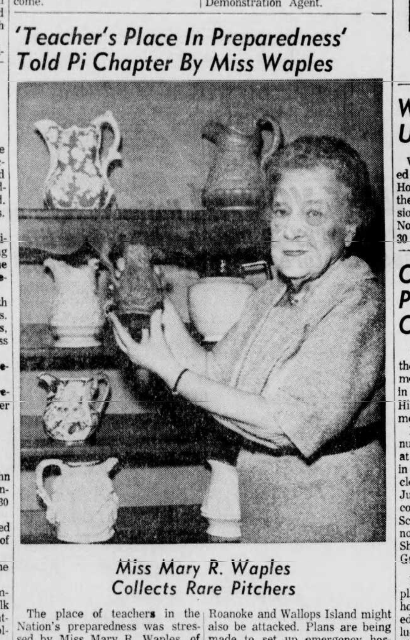
In a small town like Harrisonburg, a pair like Varner and Waples, no matter their sexual orientation, faced intense scrutiny. As historian Wendy Rouse argues, two unmarried women living together in the mid-20th century had to promote aggressively their image as respectable, gender conforming, ‘womanly’ women.12 Again, the women’s page of Harrisonburg’s newspaper reveals how both women–each a very public figure–strove to uphold idealized norms of white Southern womanhood: piety, femininity, altruism, and domesticity. They attended services at First Presbyterian, for example, but Varner also led fellowship circles for church women. Both dressed fashionably and formally, wearing dresses and hats into the late 1970s. (Varner maintained her trademark red hair for decades.) They belonged to a range of clubs and professional organizations, served as officers, and hosted meetings in their well-appointed home. Besides fresh flowers from the garden and elegant refreshments, they were known for their extensive collections of antiques, including rare black “widow” Jasperware, Mary Gregory glassware, spongeware pitchers, oriental rugs, and fine furniture. Varner often entertained students from Madison, too, including the Panhellenic Council, which she advised, and Home Economics majors, who looked upon her behavior as a model. In other words, they were a public couple that many people knew and interacted with, and they were accepted because, despite the queerness of their relationship, they comported themselves in conventionally gendered ways.13
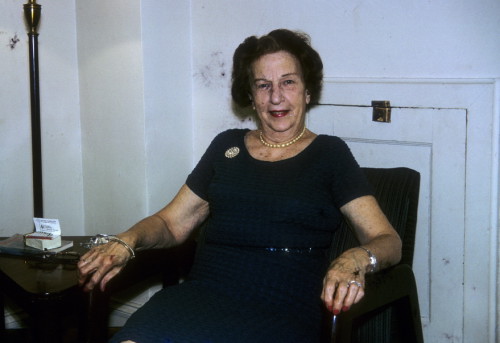
Bernice Varner finally retired from Madison College in 1959, when she was 70 years old. Her colleagues held a special celebration on campus for her and for two other professors, but the Home Ec department hosted a private dinner at the home of a friend. She had had a long, distinguished career. Just two years prior, she received an award for service to the Virginia Dietetics Association. Here, too, the article stressed her selfless mentoring of “367 dietetics graduates,” who called her “Aunt Bernice.” Mary Waples retired from the Red Cross in 1961, yet continued to teach nursing courses to teenagers at Harrisonburg High School and to rural farm women in county extension service. They must have been delighted when the college’s administrators decided to dedicate the practice house in Varner’s honor, and they sat together at the formal ceremony. Naming a building was a significant act, one that not only elevated her public contributions and status but endorsed their private life together.14
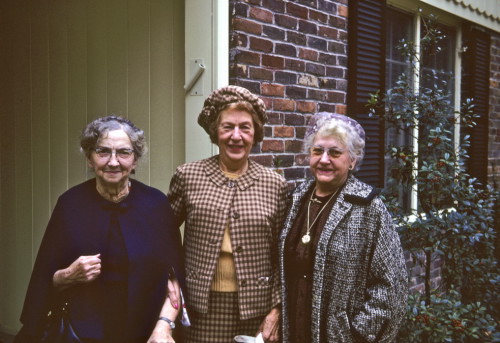
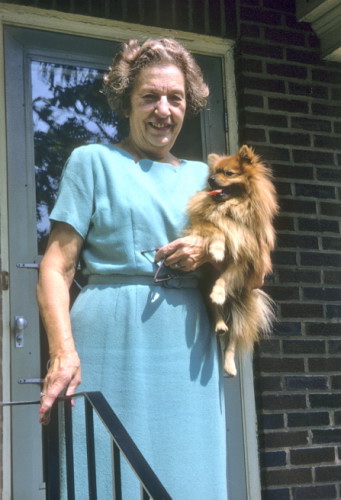
Bernice and Mary grew old together, with Mary becoming Bernice’s chief caregiver. In 1979, she wrote a brief letter to the editor thanking Meals on Wheels for delivering food to “our home.” She said Bernice was “visually handicapped,” and admitted, “I have recently had knee surgery and a broken collar bone.” Even though “we have part-time help,” the delivery was greatly appreciated. Within a few years, they made a momentous decision: Mary became Bernice’s legal guardian. Unable to marry, they found another way to legally affirm their decades-long relationship. With the proceeds from the sale of their home and its valuable contents, they moved to a local Presbyterian retirement community. When Bernice died in 1983, Mary was by her side, as indicated by the official state death record, and likely helped arrange the funeral and internment in Harrisonburg. The obituary said, “Her closest survivors are her nieces and nephews. She lived with Mary R. Waples for thirty years.” When Waples passed away aged 97 in 1993, however, her heirs interred her remains in Richmond.15
Bernice’s story challenges conventional institutional narratives, which stress heteronormativity and patriarchy through an emphasis on married men as the dominant movers and shakers. These men include the presidents and select faculty, like Dr. John Wayland, both Dingledines (father and son), and more recent administrators like Ray Sonner, who are held up as campus leaders. Myths about the “Kissing Rock” and tunnels, by contrast, which obliquely reference the Dean of Women as the invisible enforcer of curfews and dress codes, portray women members of the campus community as frivolous accessories. In fact, there were many, strong independent women like “Aunt Bernice” at Madison, professionals who took their careers seriously, navigated restrictive gender conventions, mentored students, and shaped the modern JMU.
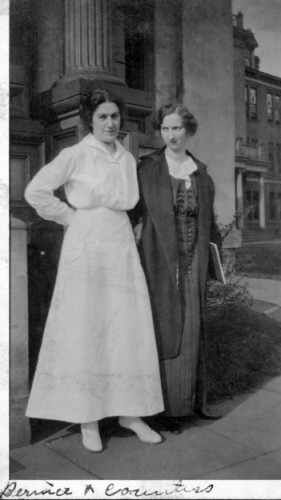
- Varner was born in Illinois, but her parents moved the family to Nashville while she was young. She went back to Illinois for college. The photo of her with a fellow colleague, Countess Mitchum, instructor of biology, led me to the yearbooks at the New Jersey State Normal at Trenton (now TCNJ), which indicate she was an instructor there from 1915 to 1919; she served as department head from 1917-1919. Her credentials were listed without dates in the HTC Register for 1924-25, published as part of the Virginia Teacher, April 1925, Vol VI, No. 4. ↩︎
- Ibid. The annual Register also listed all of the officers of the HTC and members of Duke’s council. ↩︎
- Dingledine, History of Madison College, 192; The Virginia Teacher, October 1926, 261; Pam Johnson quoted in . On the bob and 1920s fashion see Wendy Rouse. ↩︎
- Dingledine, 192. On the local airfield, see https://www.airfields-freeman.com/VA/Airfields_VA_C.htm. ↩︎
- “Our Dean of Women,” The Breeze, Sept. 26, 1927. ↩︎
- The Breeze, Sept. 26, 1927 and Date, 1929. ↩︎
- One source says that Bernice left for a new position as head of Home Economics at MTSU. There are two problems with that story. First, Wallace left campus before Bernice did. Second, she did not become department head right away, and it is extremely unlikely that she left her position as dean to become a professor, when she could have done that at HTC. Wallace Varner last appeared as an instructor in the 1928-29 School Ma’am. An ad in the DNR for Mar. 19, 1935 promoted his coal business in Staunton. He signed a license in 1935 to marry Inez Katherine Kinzie, a former teacher (BA Barnard, MA Columbia). Census records in 1950 place Wallace and Inez “Kate” Varner on a farm on the South River in Augusta County with one son. ↩︎
- The Breeze, Oct. 1934. Initially, she lived in the dorm called Harper Allen-Lee Hall today. When Junior Hall, now Cleveland Hall, opened, Varner moved into a specially built suite for the housemother in the basement level. It appears she lived there until she bought her own home around 1940-41. Deeds would confirm the date of purchase. ↩︎
- 1950 federal census schedules for Harrisonburg, Virginia. ↩︎
- Dan Bouk, “Partners,” chapter 3 of Democracy’s Data: The Hidden Stories in the U.S. Census and How to Read Them (Macmillan, 2022). ↩︎
- “Mrs. Varner Hostess to Pi Chapter Meeting,” DNR Dec. 15, 1956. ↩︎
- Wendy Rouse’s work highlights how prominent suffrage leaders “concerned with countering anti-suffrage criticism” intentionally promoted their image “as womanly women and respectable wives and mothers.” In the long term, she argues, “uplifting an image of ideal femininity and heteronormative respectability helped marginalize gender nonconforming and nonheterosexual members of the movement.” See Rouse, “Confronting the Rainbow Panic,” at Perspectives Daily (July 2025), https://www.historians.org/perspectives-article/confronting-the-rainbow-panic/. For more on the way queer women in the past performed idealized womanliness, see her monograph, Public Faces, Secret Lives: A Queer History of the Women’s Suffrage Movement (NYU Press, 2022). ↩︎
- Searching the DNR digital collection for Waples and Varner produced a large number of results documenting their very public lives, especially in the 1950s. See, for example, “Madison Home Ec Staff at Varner House,” Sept 21, 1953, which references the “garden flowers” used as decorations and the eight women who helped Varner pour and serve, indicating a large event. The antiques were listed in “Memorial Day Antique Auction,” DNR May 16, 1981. The ad noted, “From the home of Mary Waples and Bernice Varner will be sold the following collections of fine glassware and furniture which took a lifetime to collect.” The “black widow tea set” referred to Wedgewood’s rare, 18th century, black basalt ware with distinctive finials in the shape of a shrouded Sybil figure, often mislabeled as a weeping woman or widow. That set, the delicate Mary Gregory glassware, and other items mark Waples and Varner as women with excellent discernment and the affluence to acquire fine objects. ↩︎
- “Madison Home-Ec Staff Honors Mrs. Bernice R. Varner,” DNR May 27, 1959. “Varner Awarded,” DNR March 27, 1957; “Madison Building Named for Keezell,” DNR Mar. 20, 1961. “Red Cross,” DNR June 2, 1964 and Dec. 3, 1964. ↩︎
- “Letter,” DNR May 1, 1979. The ad “Memorial Day Antique Auction,” DNR May 16, 1981, cites “Mary R. Waples, owner, guardian for Bernice R. Varner.” “Varner Funeral,” DNR June 28, 1983; “Mary R. Waples,” Findagrave via Ancestry.com. ↩︎